
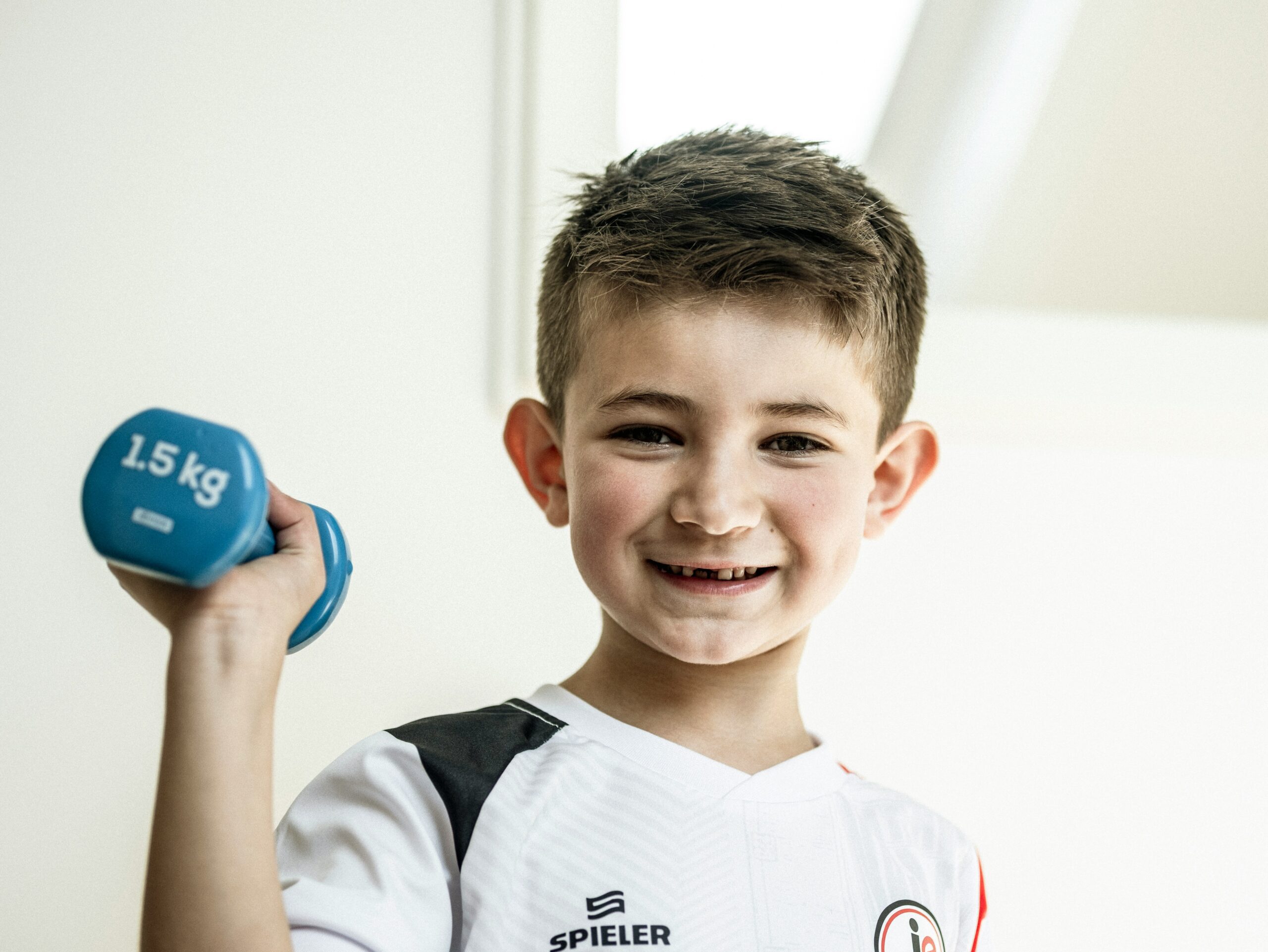
Is It Safe For My Child To Be Lifting Weights?
As a parent, it’s completely natural to question what’s safe, what’s beneficial, and what could potentially put your child at risk when it comes to exercise.
One of the most common questions we’re asked in clinic is:
“Should my child be lifting weights?”
With so much conflicting information online, it’s easy to feel unsure.
The short answer is: yes.
When done correctly, strength training can be safe, effective, and highly beneficial for children and adolescents.
Leading organisations, including the American College of Sports Medicine, the UK Chief Medical Officers’ Physical Activity Guidelines, and the International Olympic Committee all support appropriately designed and supervised resistance training for young people.
Like any form of exercise, there is some risk if guidelines aren’t followed. That’s why good technique, appropriate supervision, and gradual progression are essential.
What Does Strength Training Actually Do?
1. Mechanical Tension – Challenging the Muscles
When a child lifts a load that is challenging for them, their muscles must work harder to overcome that resistance.
This creates mechanical tension, which signals the body to adapt and become stronger.
Controlled movements with appropriate loads provide the safest and most effective stimulus for strength development.
2. Tissue Adaptation – Building Stronger Muscles
Strength training places a small, controlled amount of stress on muscle tissue.
In response, the body adapts by making muscles:
- stronger
- more resilient
- better able to tolerate load
While minor structural disruption can occur, strength gains in children are driven far more by coordination and nervous system improvements than muscle damage.
3. Metabolic Stress – The “Burn”
During more challenging exercises, muscles may feel a burning or “pump” sensation.
This reflects temporary metabolic changes within the muscle and can:
- support adaptation
- improve local circulation
- contribute to overall training effect
However, in children, this plays a supporting role. Technique, consistency, and gradual progression are far more important.
4. Neural Adaptations – Getting Strong Before Getting Bigger
In children, early strength gains come primarily from the nervous system, not increases in muscle size.
The brain becomes better at:
- recruiting muscle fibres
- coordinating movement
- producing force efficiently
This is why children often get stronger quickly without “bulking up.”
5. Recovery and Nutrition – Where Progress Happens
Exercise provides the stimulus — adaptation happens during recovery.
For healthy development, children need:
- adequate nutrition (including protein)
- good quality sleep
- rest days between sessions
Without sufficient recovery, training becomes stress rather than progress.
What About Growth Plates?
A common concern is whether weight training can damage growth plates or affect height.
Current evidence shows that properly supervised strength training does not stunt growth or increase the risk of growth plate injury.
Most injuries reported in young people occur when:
- exercises are performed with poor technique
- training is unsupervised
- loads are inappropriate
When programmes are well designed, strength training is considered as safe — or safer — than many common youth sports.
What Does Strength Training Look Like for Children?
Strength training for children doesn’t mean heavy barbells or bodybuilding-style workouts.
It can include:
- bodyweight exercises (squats, lunges, push-ups)
- resistance bands
- light dumbbells
- climbing and gymnastics-type activities
- medicine ball throws (for older children)
The focus should always be on movement quality, control, and confidence, not lifting heavy weights.
The Bottom Line for Parents
When performed safely and with proper guidance, strength training can help children:
- build strength and coordination
- improve confidence
- reduce injury risk in sport
- develop long-term healthy exercise habits
Most children can begin structured resistance training from around 7–8 years old, once they can follow instructions and demonstrate basic movement control.
Strength training at this age is not about “bulking up” — it’s about building a strong, capable, and resilient body.
Current UK Physical Activity Guidelines
The NHS recommends that children:
- achieve at least 60 minutes of moderate-to-vigorous activity daily
- include muscle and bone strengthening activities at least 3 times per week
Key Strength Training Guidelines for Children
Warm-Up and Cool-Down
- Begin with dynamic movements (e.g. jogging, skipping, mobility drills)
- Prepare the body for the exercises being performed
- Finish with light stretching if appropriate
Build Skills Before Load
Progression should follow a logical order:
- simple → complex movements
- bodyweight → external resistance
- controlled → faster/explosive movements
- stable → less stable environments
Focus on Effort, Not Max Lifting
In younger or less experienced children, strict percentages (like 1-repetition maximums) are not necessary.
Instead:
- aim for good technique throughout
- stop sets with 2–3 repetitions still in reserve
- prioritise consistency over intensity
Training Frequency
- 2–3 sessions per week is appropriate
- allow rest days between sessions
- sessions can be short (20–40 minutes)
Progress Gradually
- Increase difficulty only when exercises feel comfortable
- Progress by:
- improving technique
- adding small amounts of resistance
- increasing repetitions gradually
Include Stability and Control
Programmes should also include:
- shoulder and scapular stability
- core strength
- knee control and balance work
- training of opposing muscle groups
Potential Benefits of Youth Strength Training
Research shows that properly supervised resistance training can:
- improve strength and coordination
- enhance sports performance
- reduce injury risk
- support healthy body composition
- contribute to long-term physical and mental health
How Physiotherapists Can Help
At Head2Toe Physio, our clinicians have experience in youth strength training and rehabilitation.
We ensure your child is:
- training safely
- using correct technique
- following a programme tailored to their age and goals
Whether your child is returning from injury or building general strength, we’re here to support their long-term health, confidence, and performance.
👉 Book an appointment or learn more at www.head2toephysio.co.uk
Our Physiotherapists are highly qualified, experienced, with a variety of post graduate specialisations. If you or anyone you know would like to have a physiotherapy assessment with the team at Dorking , Leatherhead or Crawley , contact us here.
Blog post guest written by Toby Marcroft, Head2Toe Physiotherapist, Dorking, Leatherhead, & Crawley Clinics.